
Backcountry skiing, particularly in Colorado, is an incredibly dangerous hobby. It is also a hobby which can be made much safer through intensive research, training, and planning. That being said, it will always pose inherent risks. Simple and innocent lapses in decision making can very easily cause serious injury or death when skiing steep and exposed terrain, and I was incredibly lucky to be able to come out of this situation uninjured.
My partner, Max, and I both had avalanche education (AIARE 1) and extensive practice in companion rescue. We both felt very confident that the technicality of this line was well within our ability, and we did discuss and acknowledge the inherent dangers of attempting a line like this and felt prepared to respond to them if anything went wrong. We both had full avalanche rescue gear (transceiver, shovel, probe) and were well equipped in using them. Furthermore, the party of two above us (who remotely triggered the wind slab above them) fully communicated with us the risk and probability of them triggering some wind slabs from above, and we fully understood and accepted that risk.
I hope that by reading this, you can learn some valuable lessons from my misjudgement and not have to receive an ass whooping from mother nature to have them set in stone. Thank you for taking the time to read my writing and I am more than happy to talk to anyone interested in this kind of thing about the incident.
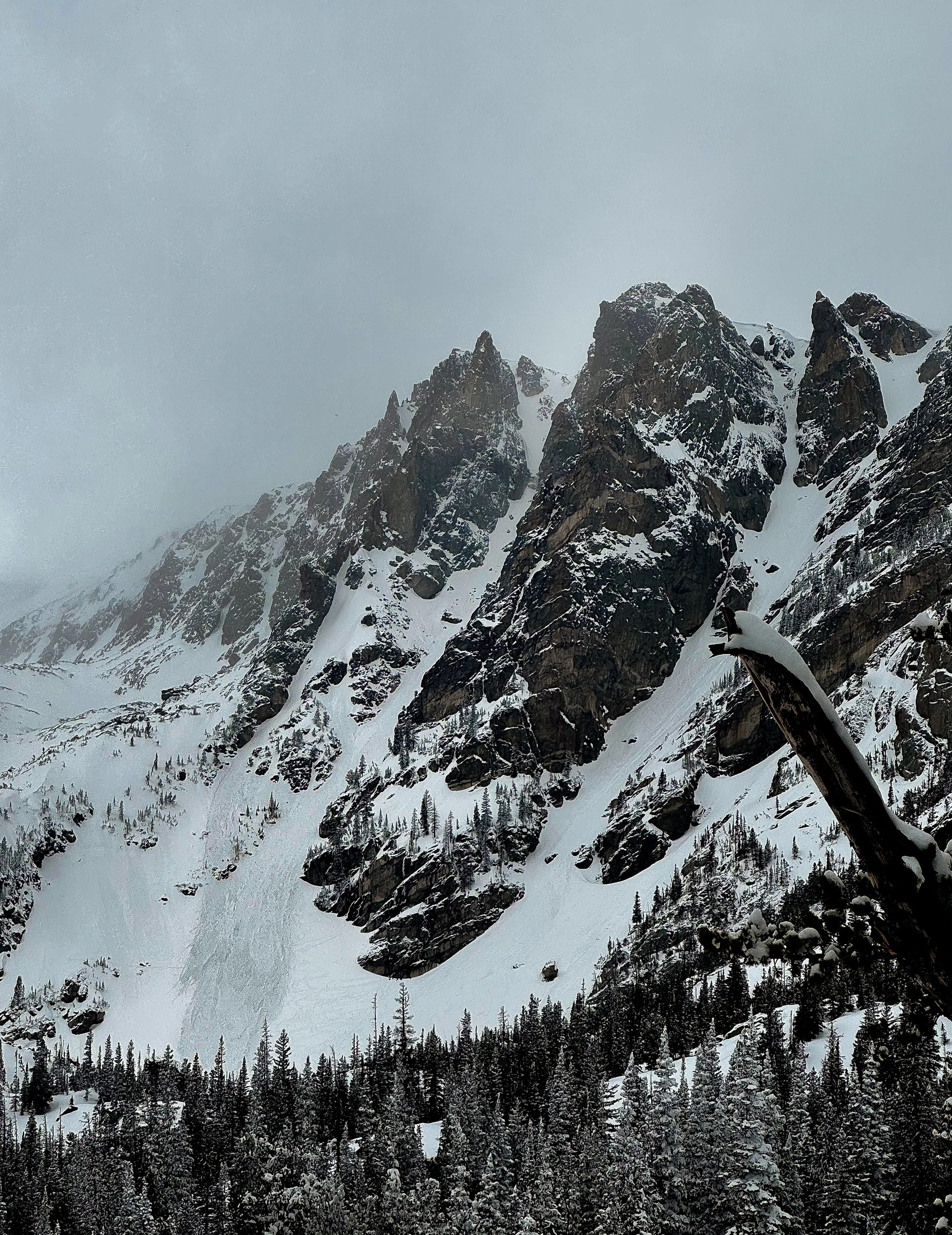
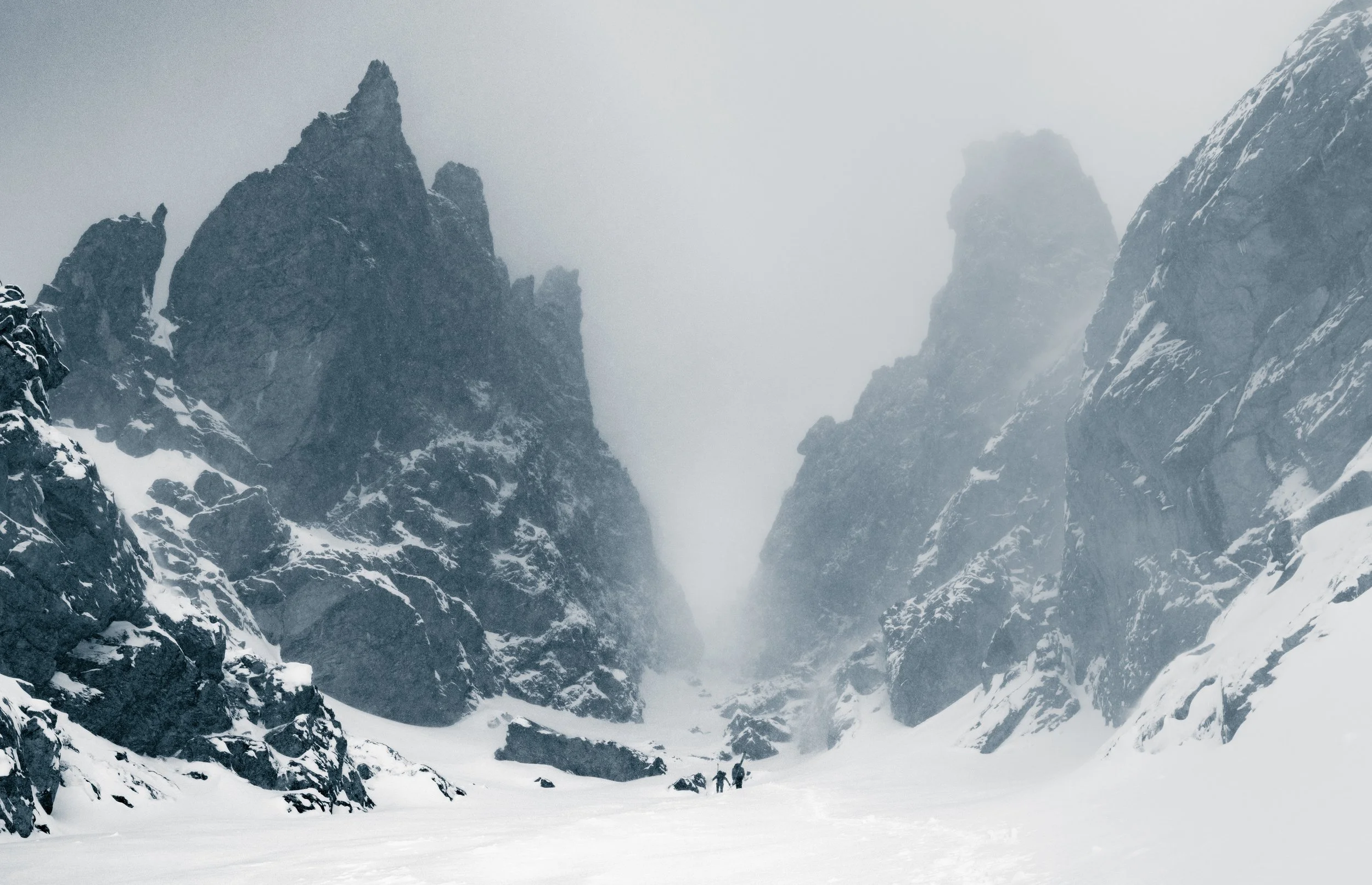
Dead Elk Couloir is a steep and exposed 1800 foot gully that comes off of the summit of Flattop Mountain in Rocky Mountain National Park. Shrouded by towering spires and oftentimes hidden by the low clouds that flood the range, the route is stunning. While it's easy to be allured by its beauty, its also easy to be thwarted by it's complications. Dead Elk is a little more involved than your average backcountry ski line, requiring a short but mandatory mixed climb (about 50 feet) up a rock face to access the last portion of the line. Consequentially, a rappel or downclimb is necessitated as you ski down.
All that aside, Dead Elk is also one of the most easily accessible ski lines of this caliber, taking under an hour from trailhead to base at a moderate speed. I awoke to my alarm around 4:30 a.m. in Boulder and packed my bags. I've never been very good at keeping organized but as always, I made sure to pack my avalanche gear as well as my camera gear. I began driving to Fort Collins to pick up my friend Max and before we knew it, we were in the Bear Lake parking lot in RMNP. We got our skins on and hit a rather fast pace, cruising up to Emerald lake in under an hour and passing quite a few hikers who didn't have the flotation advantage that our skis provided.
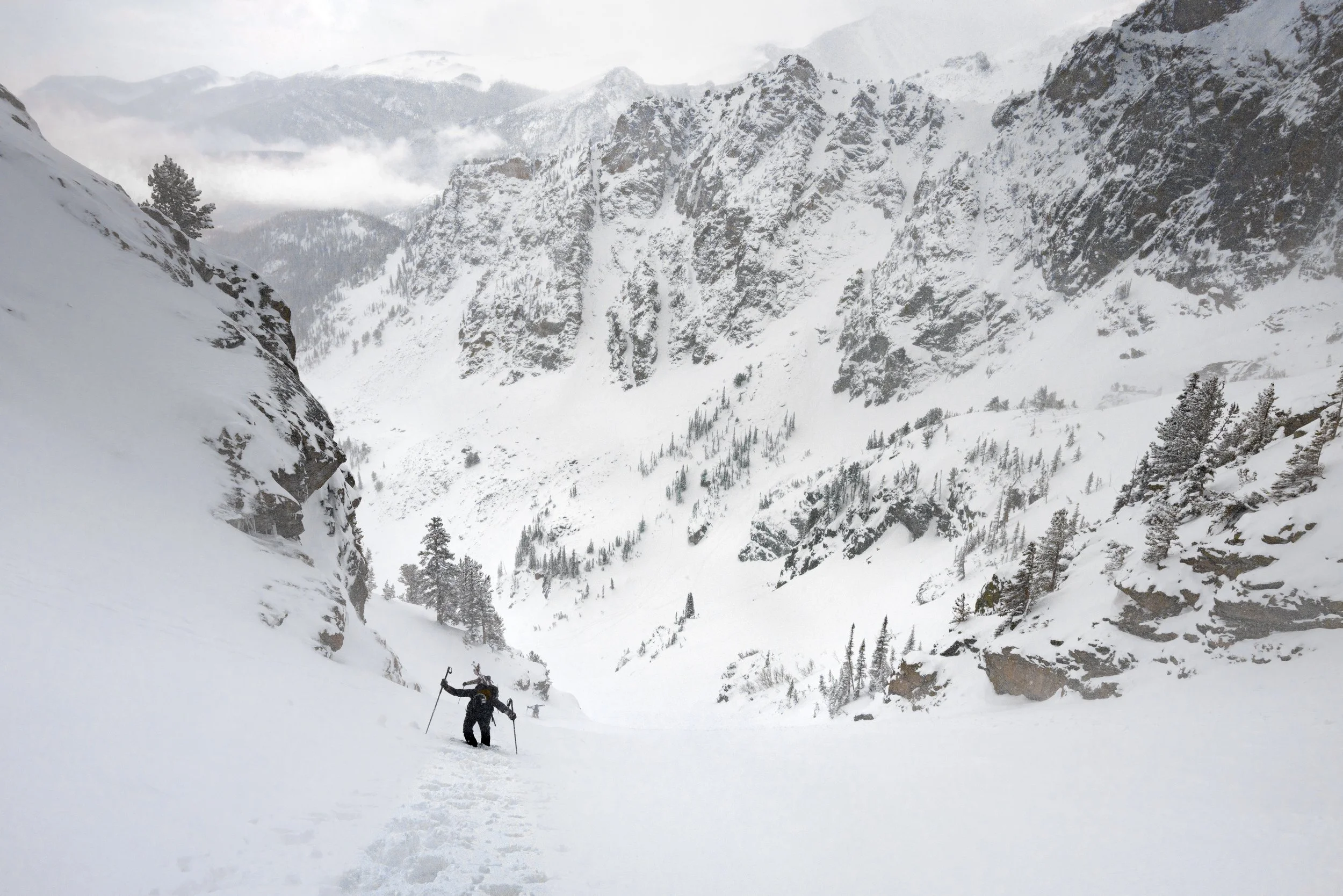
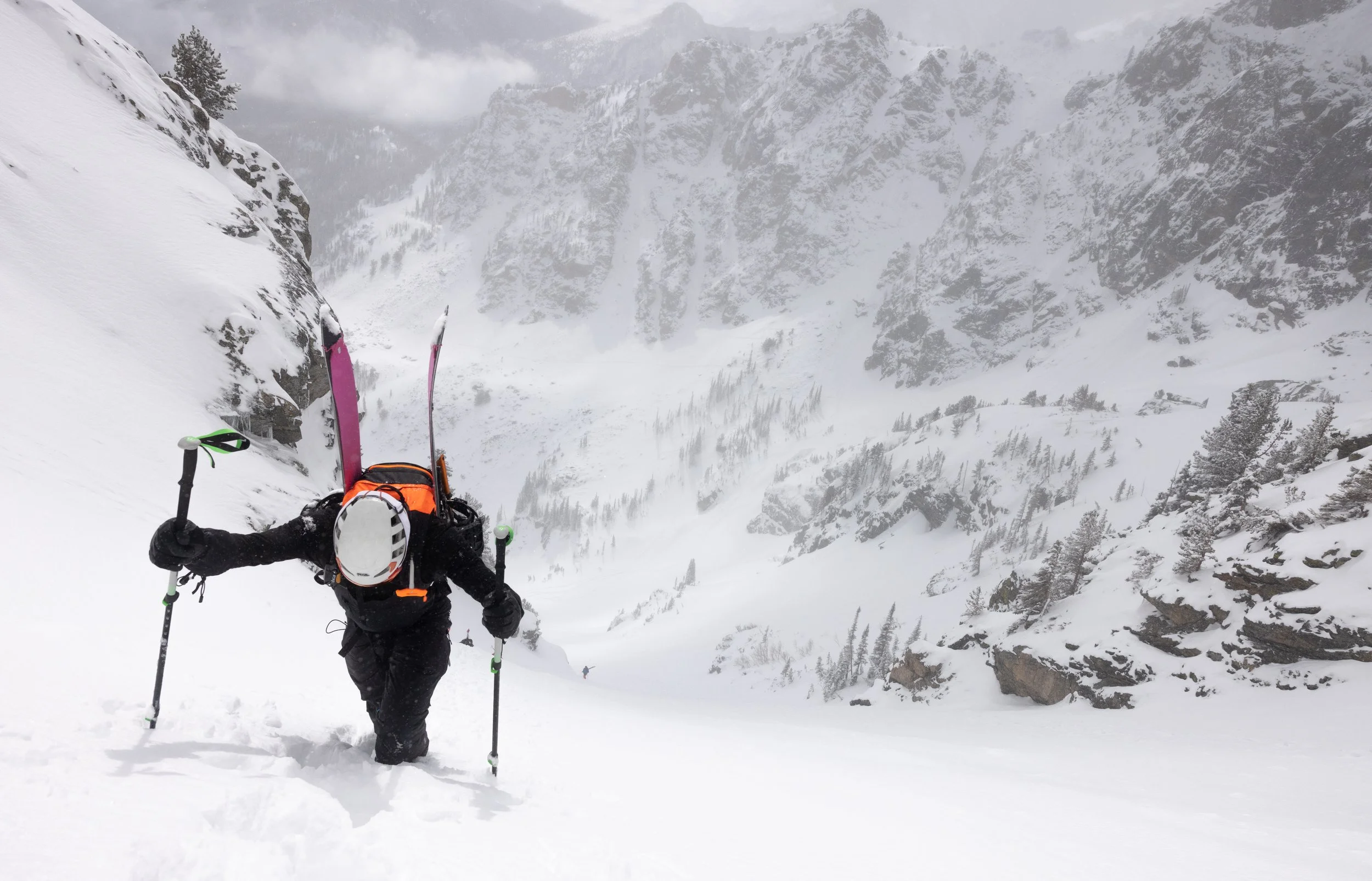
Max and I were beaming with excitement as we began climbing the couloir behind the two new friends we had made at the bottom. The morning was young and the line was filled with well over a foot of blower snow from the storm the night prior. As we climbed higher and higher, the snow only seemed to get better. We looked for shooting cracks, drum noises, all the sounds and little hints the snow can give you as a warning that it's not happy to have any visitors before it explodes under your feet. We found none of those, and only had to negotiate a few somewhat concerning moulins (deep vertical holes in the snow caused by heat and water percolating through the snowpack) that poked more than a body length into the snowpack.
With each step, our guard lowered a little bit, the reassurance of the boot thumps and kicks from the party about 100 feet above us telling us that all was well. As we approached the start of the mixed climb, we were beginning to notice that the couloir was getting a bit crowded as some fellow skiers were tailing behind us. It was something we both noticed and mentioned but not anything that caused us immediate concern. The spires surrounding us loomed over like sentries, guarding the upper portion of the couloir and piercing through the fog. It was an intimidating and inspiring environment. We stopped for a moment to take it all in and prepare to negotiate the rock band, and that was the last of our excitement.
A slight, echoed yell, from the party above us rattled slowly through the air. We both looked up and saw what nobody wants to see in a place like this. A massive plume of snow, hugging both walls of the narrow hallway and barreling down towards us faster than we could process. It was immediately disorienting, as the plume had to be at least 20 feet tall but also completely obscured the avalanche itself. We didn't know if we were about to just be hit by a big wave of spindrift or get nailed by feet upon feet of snow. That being said, my brain automatically assumed the worst. We had maybe two seconds to make a decision, not that there was much we could do. Max and I both instinctively braced behind rocks, trying with any little power we had to shelter from the wave before it hit us like a truck. From then on was a blur, tumbling, shrieking, and gasping for air. I tried to get any percentage of a breath that I could when my closed eyes sensed a split second of light, but I was only fed ice. Not to mention, I was already quite out of breath from booting up 1400+ feet of deep snow. Just to make it a little worse, I was being intermittently and aggressively choked by the waist strap of my backpack. The skis that were attached to my backpack acted like pickets in the snow, burying themselves deep every time I was in the right orientation and yanking me upwards whilst I had thousands of pounds of snow ripping me downwards.
It was a feeling I can only describe as being blindfolded, hit by a car, and then put in a washing machine with that car for the longest 20 seconds of your life. It reminded me of when I was a little kid on vacation with my family, and would go jump into the big wave breaks in the pacific ocean and let them ragdoll me. The only difference was in the ocean, I knew that the swell would stop within a few seconds and I'd be able to pop my head out, catch a breath, and do it again. This time it wasn't something I was seeking out, and I had no idea how long I was gonna be taking the beating. The entire time, I was waiting to be slammed into one of the trees or stone blocks that littered the walls of the couloir, hoping it would knock me out if I hit it. Luckily, that was not the case.
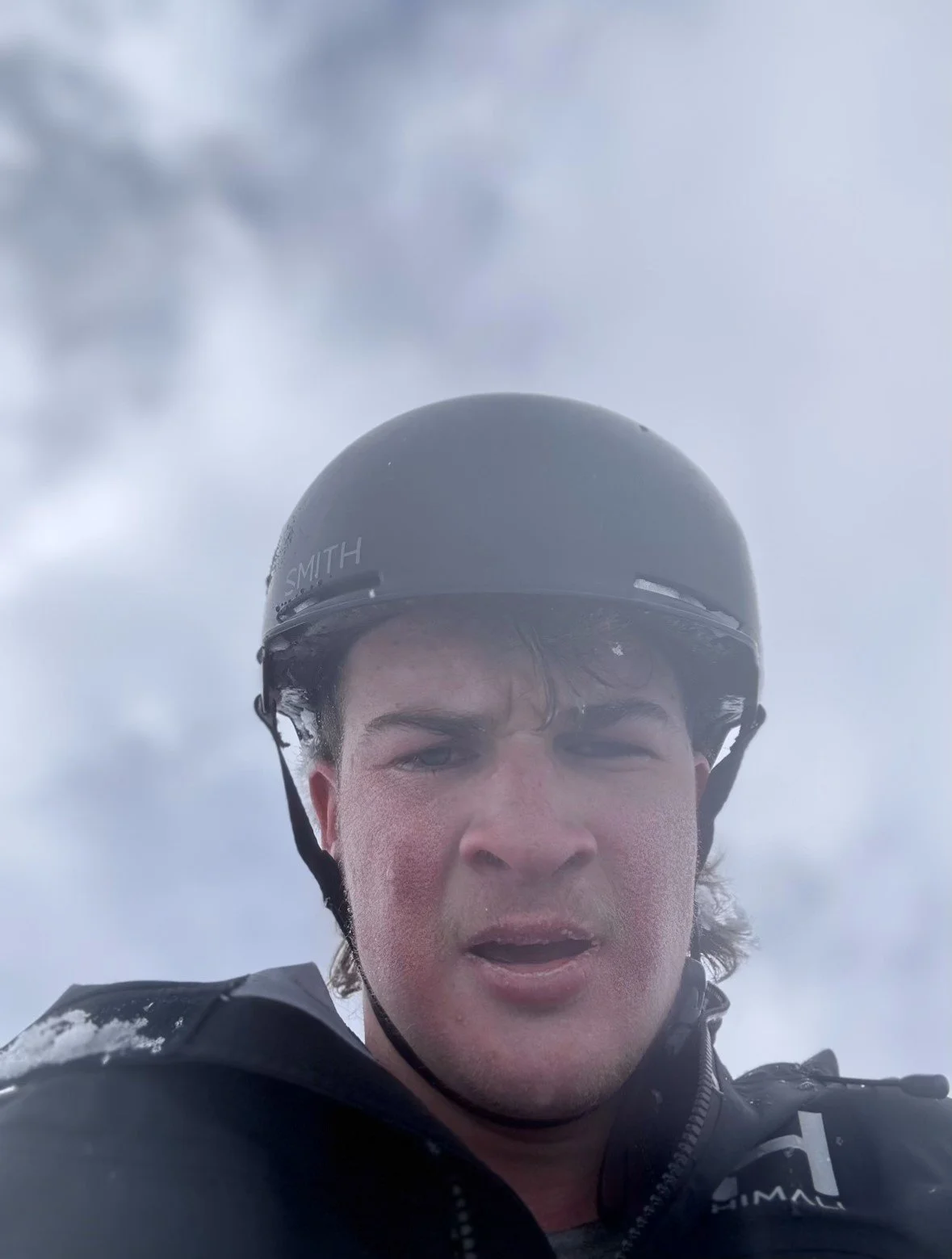
I ended up with my head out of the chaos as the slide came to a slow on the lower angled apron below and spit me out well over a thousand feet below. I could hear the yells of those above me as a head count was gathered and was relieved to quickly find out that everybody caught in the slide was conscious, relatively uninjured, and able to stand. I regurgitated the 10lbs of snow I had for breakfast as Max searched for his missing splitboard and everyone found what they could of their gear. I'm not sure what the antonym of "victory turns" is, but we made a few of those to descend the apron back down to Emerald Lake and begin the quick ride back to the car. It's weird because while I absolutely was not happy with how the day went, it is probably the most elated I have ever been after skiing (or trying to ski) something. The day went about as bad as it could have, but we were alive. Everyone was. The feeling of surviving a close call is one I don't want to experience again, but it absolutely invokes a unique feeling of euphoria.
We were definitely both in a low grade shock for the next few hours as we replayed how serious of a situation that was, and the irony of coming out of it with nothing but some bruises, scrapes, and a few days of soreness. Had that avalanche had triggered when the party above us, or we, made it above the rock band, the outcome would almost certainly have been far more grim. Not to mention, everyone caught in the slide had crampons on to allow our feet purchase as we climbed the steep snow. I'm glad to say that doing gymnastics with razor blades on our feet and in our hands without receiving any grievous injuries is one skill we can all add to our resume, but I'm not so sure it'd go the same way if I had to give another performance.
There have been a select few times in my life where I very quickly thought that I could get seriously injured or die, be it slipping on an exposed ridgeline or falling through a floor in an abandoned factory, but what made this experience different is that I think I actually believed it. These previous experiences were scary, no doubt, but I was quickly relieved of them by being able to gain control of the situation. What made this particular experience so scary for me is that as soon as I was swept off my feet and sent into a cold whiteout, there was zero sense of "control". I knew that I no longer had a say in what was going to happen to me. What made this experience weird, and makes me still have a lot of difficulty fully recounting it, was that I didn't feel that shiver down my spine or those butterflies in my stomach like I had in all those experiences before. I didn't really feel any emotions at all. It was almost as if my brain had somehow numbed itself and forced me to just accept the shitshow that I had gotten myself into.

Analysis
After taking the time I needed to fully process the event, I've compiled a few critical details, mistakes, and actions that I think contributed to this happening in the first place.
Inconsistent communication with the party above us. We stopped to speak very briefly with the party we had made friends with at the base of the couloir, talking about how we could split the bootpack but knowing damn well they were going to lap us. We all agreed that there would be a wind slab issue given that the previous night the park had received over six inches of snow, and the couloir had garnered much more. We never strayed more than about 200 hundred feet from this party above us, but we didn't really have a good way of talking to them.
Insufficiently thorough analysis of wind loading. Colorado is known for its strong westerly winds, particularly from the southwest. Dead Elk Couloir faces almost perfectly East (as well as southeast in spots). It doesn't take a scientist to assume that, in the presence of new snow, and particularly new storm snow that has been drifted from west to east by the wind, that the entirety of this couloir will be loaded with wind slabs. The walls of the couloir are hundreds of feet high on either side towards the top, creating a funnel effect, catching snow that has blown in other directions as well and cross-loading the line with even more snow towards the top.
Approaching from the bottom. Typically with lines like this, where you should expect a wind slab on the top, you would approach from the top of the line. This allows you to perform a controlled ski cut and hopefully break the wind slab below you and send it down the couloir, eliminating the risk of it breaking above you.
Not digging a snow pit. Digging a pit allows you to examine how the new snow has bonded (or not bonded) to the existing snowpack, giving you a much more concrete assessment of stability. Due to a mix of stubborn excitement, and assuming that the snow conditions at the bottom of the apron would not really reflect the snow conditions at the top of the line, we skipped digging a pit entirely.
What Could Have Been Done Differently
- Picked a line with a more direct and visible fall line that we could have examined from the top. This would have allowed us to confirm nobody was coming up from the bottom, and therefore safely perform a ski cut to eliminate the wind slab problem.
- Started much earlier than we did, reducing the risk of crowding in the couloir.
- Picked a more remote line. The Emerald Lake cirque is an incredibly popular backcountry skiing and recreation area. Starting up a couloir at 9am on a Saturday is the equivalent of going to a grocery store at 6pm on a Sunday.
The most we can do is live and learn.
Back to Home